Why Florida Homeowners Must Watch for Drywall Water Damage
Living in Central Florida means enjoying sunshine, warm weather, and a vibrant community — but it also means dealing with one of the most challenging climates for residential construction. The combination of high humidity, intense summer storms, and the occasional hurricane creates the perfect conditions for water intrusion and drywall damage. At Drywall Texture Pros, we respond to water damage restoration calls throughout Ocala, The Villages, Leesburg, and surrounding Marion County communities every week — and the most common theme we hear from homeowners is: "I wish I had caught it sooner."
The good news is that drywall water damage almost always gives you warning signs before it becomes a major structural or mold problem. Knowing what to look for can save you thousands of dollars in repairs and protect your family's health. Here are the seven most critical warning signs every Florida homeowner should know.
1. Brown or Yellow Staining on Walls or Ceilings
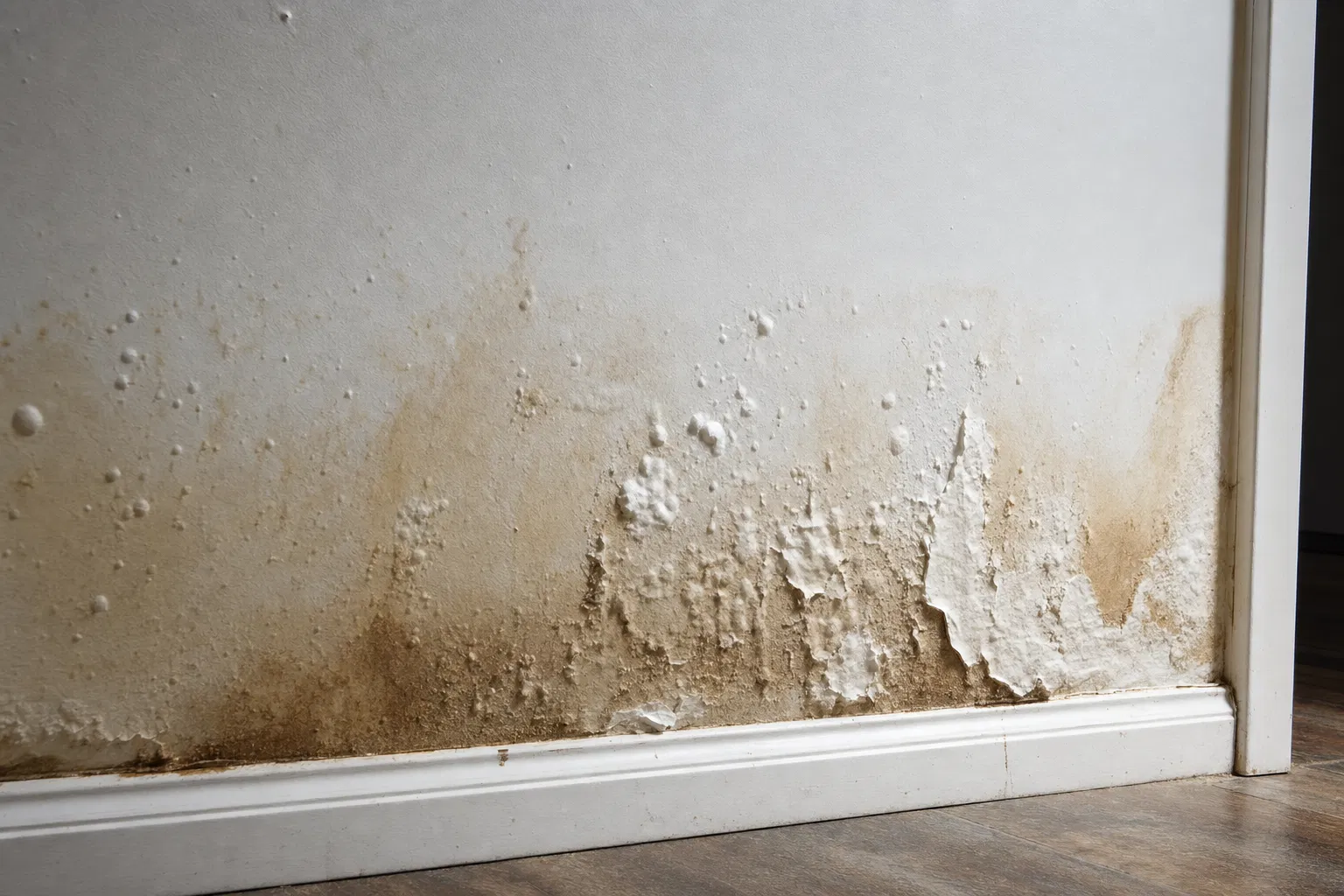
The most recognizable sign of water damage is discoloration — typically brown, tan, or yellowish stains that appear on your walls or ceiling. These stains are caused by minerals and organic material in water that leach into the drywall paper and gypsum core as moisture evaporates. In Florida homes, ceiling stains are especially common after roof leaks, AC condensation line failures, or upstairs bathroom plumbing issues.
It's important to note that a stain doesn't always mean the leak is directly above the discoloration. Water can travel along roof rafters, ceiling joists, or wall studs before pooling in one spot. If you see a stain, the source of the moisture may be several feet away from where it appears. A professional assessment is the only way to accurately trace the origin of the leak.
2. Soft, Spongy, or Crumbling Drywall
Healthy drywall is firm and rigid. When you press on a wall or ceiling and it feels soft, spongy, or gives way under light pressure, the gypsum core has been saturated with moisture and has lost its structural integrity. This is a serious sign that the damage has progressed beyond surface staining and that the affected drywall needs to be removed and replaced — not just dried out.
Soft drywall is also a prime environment for mold growth. The porous gypsum and paper facing provide an ideal food source for mold spores, which can begin colonizing within 24 to 48 hours of moisture exposure in Florida's warm climate. If you discover soft drywall, contact a professional water damage restoration specialist immediately.
3. Bubbling, Peeling, or Blistering Paint
Paint that is bubbling, blistering, or peeling away from the wall surface is a strong indicator of moisture trapped beneath the surface. As water vapor pushes through the drywall, it breaks the bond between the paint and the substrate, creating those characteristic bubbles and blisters. This symptom is particularly common in bathrooms, kitchens, laundry rooms, and on exterior walls where condensation can form.
Many homeowners make the mistake of simply repainting over bubbling paint without addressing the underlying moisture issue. This approach will always fail — the new paint will bubble again within weeks or months. The correct solution is to identify and eliminate the moisture source, allow the wall to dry completely, repair or replace the damaged drywall, and then repaint with a moisture-resistant primer and paint.
4. Visible Mold or Mildew Growth
If you can see mold or mildew on your walls or ceiling — whether it appears as black spots, green patches, or a fuzzy gray growth — you have a serious problem that requires immediate professional attention. Mold is not just an aesthetic issue; certain mold species produce mycotoxins that can cause respiratory problems, allergic reactions, and other health issues, particularly in children, the elderly, and people with compromised immune systems.
In Florida, the most common mold species found in water-damaged drywall include Cladosporium, Penicillium, Aspergillus, and the notorious Stachybotrys chartarum (black mold). Any visible mold growth should be evaluated by a certified mold inspector before drywall removal begins. Our team at Drywall Texture Pros coordinates with licensed mold remediation professionals to ensure your home is safe before we begin restoration work.
5. Musty or Earthy Odors
Sometimes water damage is hidden inside walls or above ceilings where you can't see it — but you can smell it. A persistent musty, earthy, or damp odor that doesn't go away with cleaning or air fresheners is often a sign of mold or mildew growing inside your walls. This is especially common in homes with older plumbing, inadequate bathroom ventilation, or roof areas that have experienced minor leaks over time.
If you notice a musty smell that seems to be coming from a specific wall or area of your home, don't ignore it. The longer hidden moisture goes unaddressed, the more extensive — and expensive — the resulting damage will be. A professional moisture inspection using thermal imaging and moisture meters can detect water damage that is completely invisible to the naked eye.
6. Warping, Buckling, or Sagging Drywall
Drywall that is visibly warped, buckled, or sagging away from the wall or ceiling framing has absorbed a significant amount of moisture and is no longer structurally sound. This is particularly dangerous on ceilings, where a heavily water-saturated section can collapse under its own weight. If you notice any sagging in your ceiling drywall, keep people out of that area and call a professional immediately.
Wall drywall that is buckling or pulling away from the studs is also a serious concern. In addition to the structural issue, this type of damage typically indicates that moisture has been present for an extended period, increasing the likelihood of significant mold growth within the wall cavity.
7. Cracks That Appear After Heavy Rain
While small hairline cracks in drywall can be caused by normal house settling, cracks that appear or worsen after heavy rainfall are a red flag for water intrusion. When water enters a wall cavity and saturates the drywall, the material expands. As it dries, it contracts. This repeated expansion and contraction cycle creates cracks in the drywall surface and can also damage the joint compound at seams and corners.
If you notice new cracks appearing after Florida's summer storms, have your roof, flashing, windows, and exterior walls inspected for potential entry points. Addressing the water source early is always far less expensive than waiting until the damage becomes extensive.
What to Do If You Suspect Water Damage
If you've identified one or more of these warning signs in your home, here's what to do:
- Stop the source: If you can identify and stop the water source (a leaking pipe, roof leak, etc.), do so immediately.
- Document the damage: Take photos and videos for insurance purposes before any work begins.
- Call a professional: Contact a licensed drywall repair and water damage restoration specialist for a professional assessment.
- Don't delay: In Florida's climate, mold can begin growing within 24-48 hours of moisture exposure.
At Drywall Texture Pros, we provide comprehensive water damage drywall restoration services throughout Ocala and Central Florida. Our team will assess the damage, remove and replace affected materials, and restore your walls and ceilings to their original condition — or better. Contact us today at (352) 644-9166 or request a free estimate online.
Frequently Asked Questions About Drywall Water Damage
How much does water damage drywall repair cost in Ocala, FL?
The cost depends on the extent of the damage, the square footage affected, and whether mold remediation is required. Minor repairs can start around $200-$400, while extensive damage involving multiple rooms can range from $1,500 to $5,000 or more. We provide free, transparent estimates with no hidden fees.
Can water-damaged drywall be dried out and reused?
In most cases, no. Once drywall has absorbed significant moisture, the gypsum core is compromised and the paper facing may harbor mold spores. The safest and most effective approach is to remove and replace the damaged sections. Attempting to dry out and reuse water-damaged drywall often leads to mold problems and recurring issues.
Will my homeowner's insurance cover water damage drywall repair?
Most homeowner's insurance policies cover sudden and accidental water damage (such as a burst pipe) but may not cover damage resulting from long-term neglect or gradual leaks. We recommend contacting your insurance provider and documenting all damage thoroughly before beginning repairs.